
 Image 1 of 6
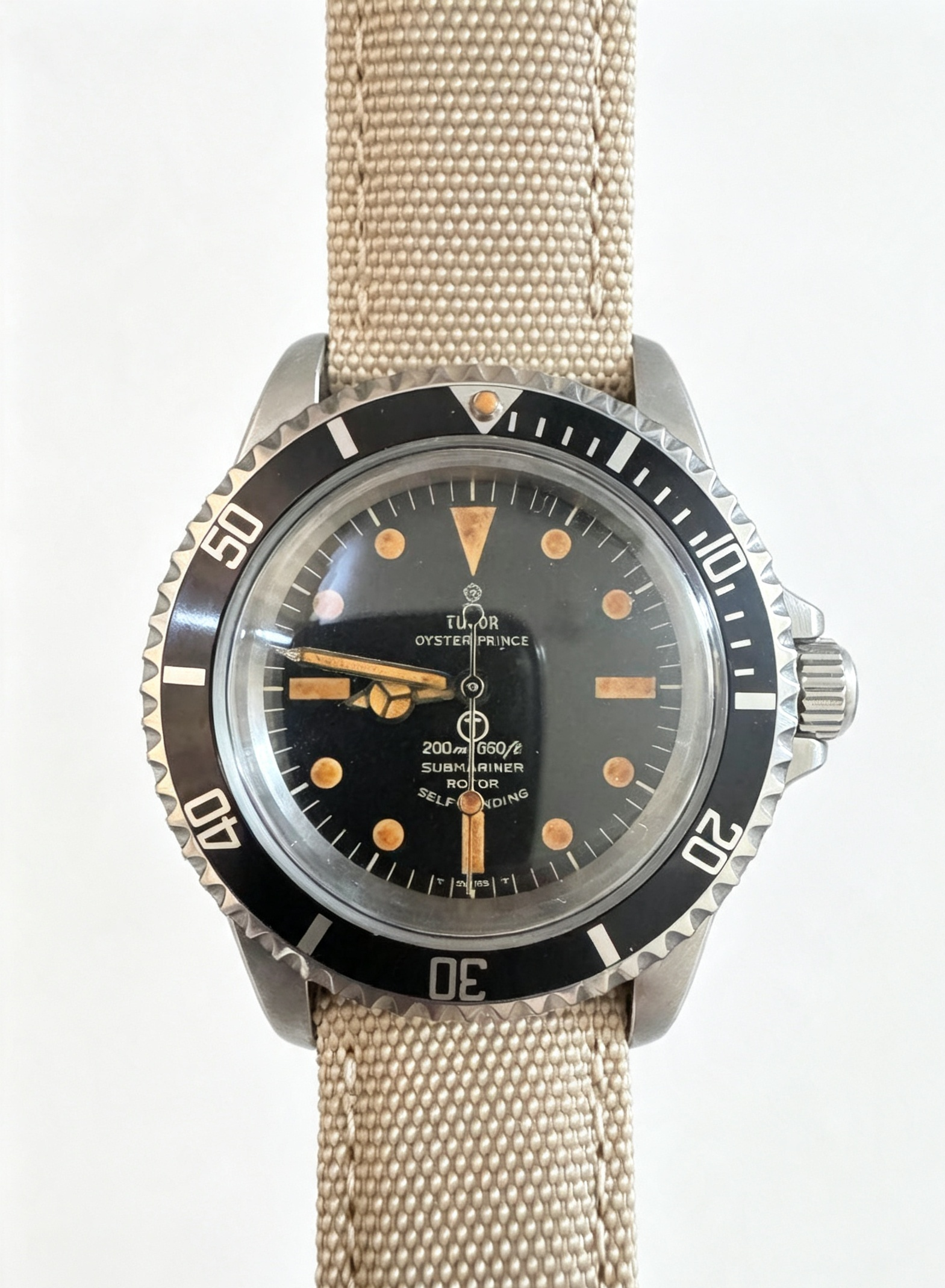 Image 2 of 6
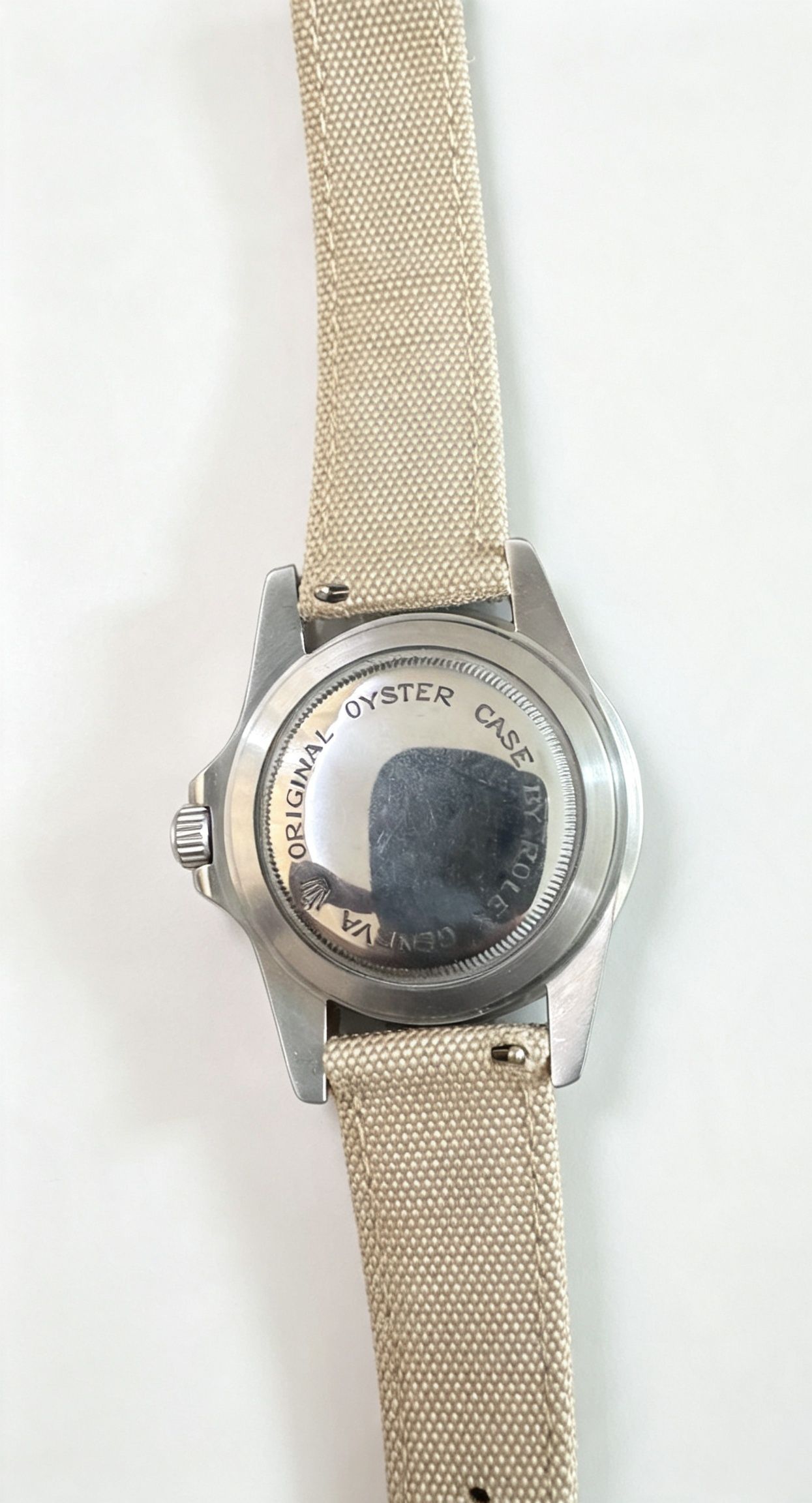 Image 3 of 6
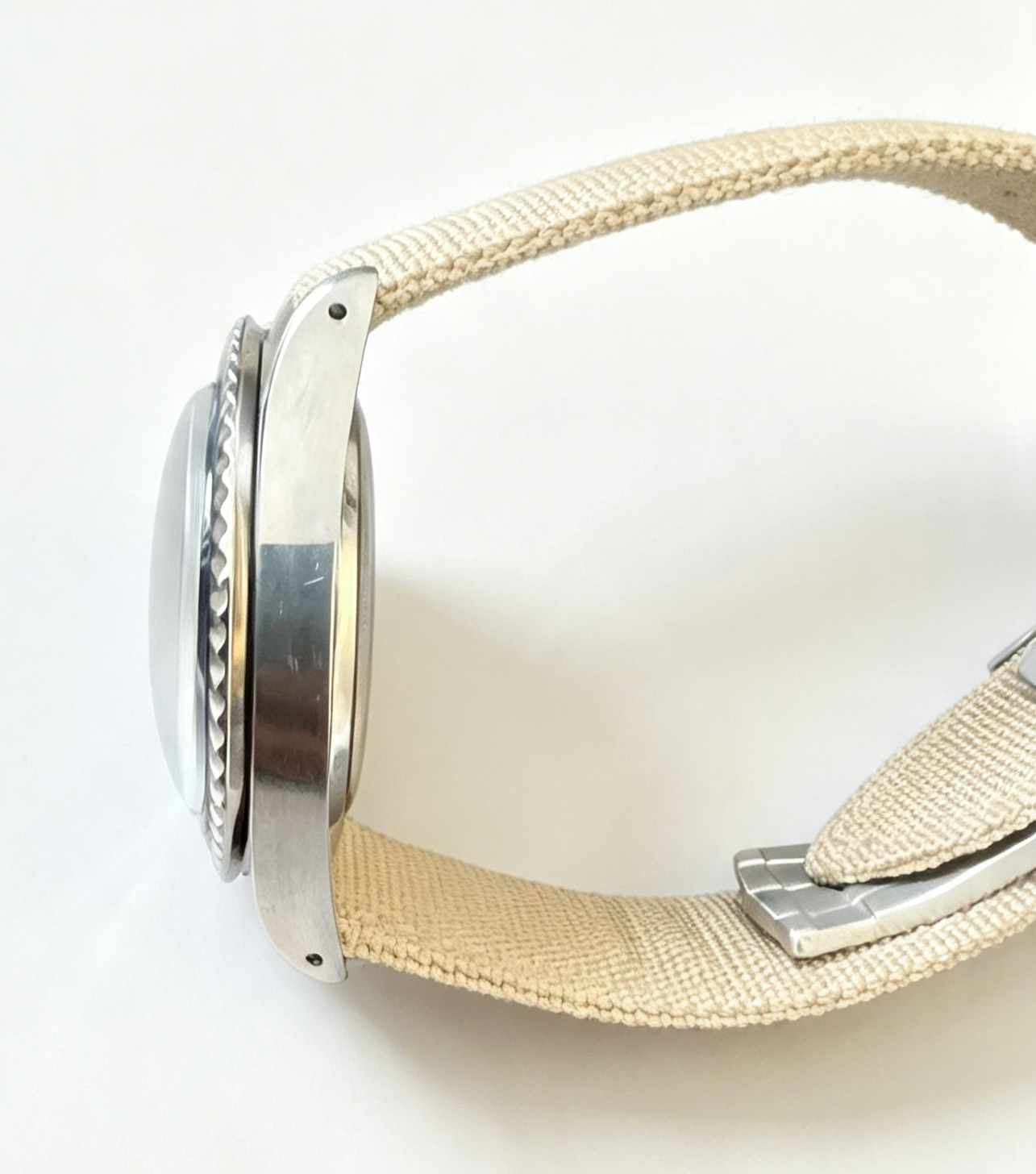 Image 4 of 6
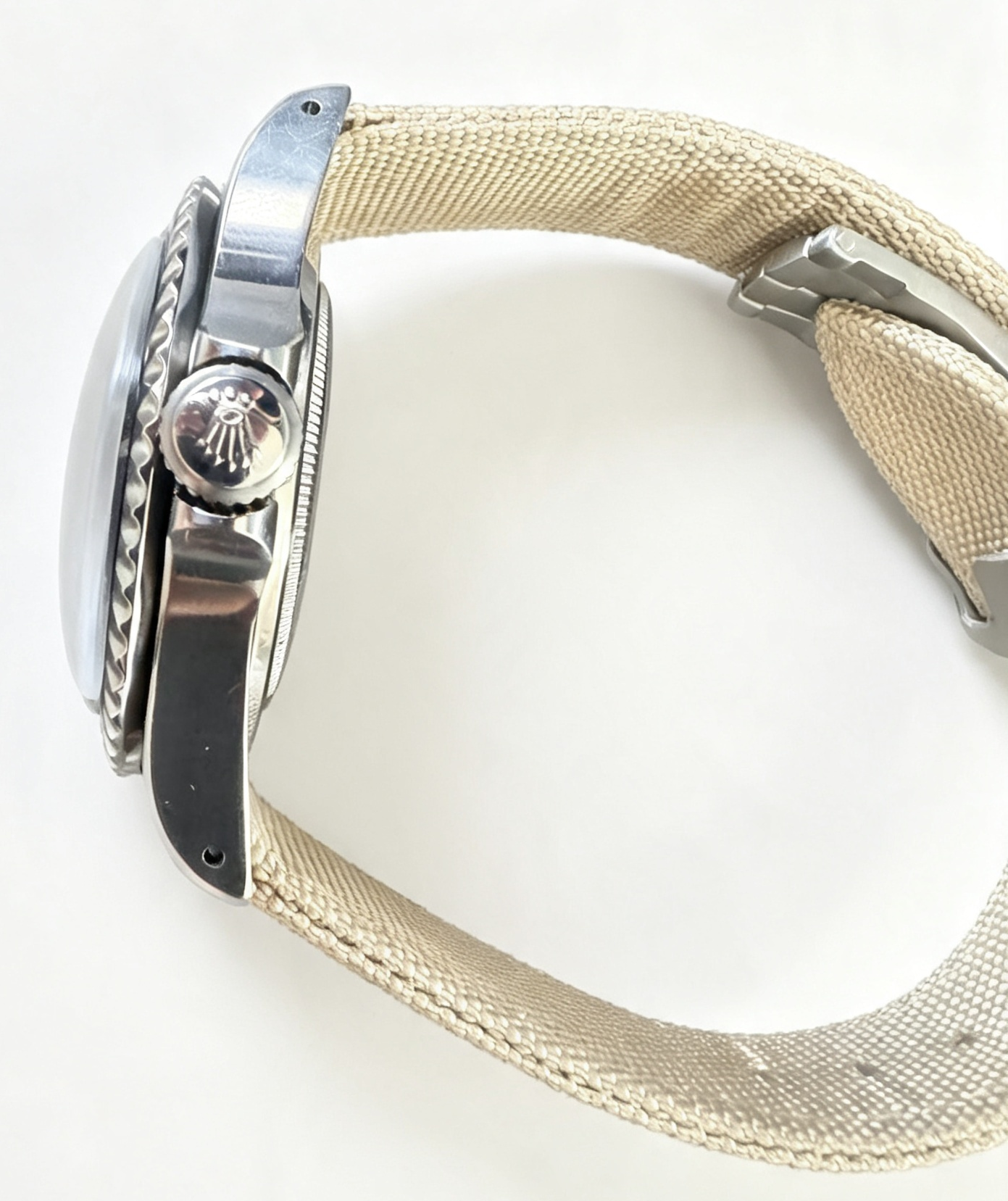 Image 5 of 6
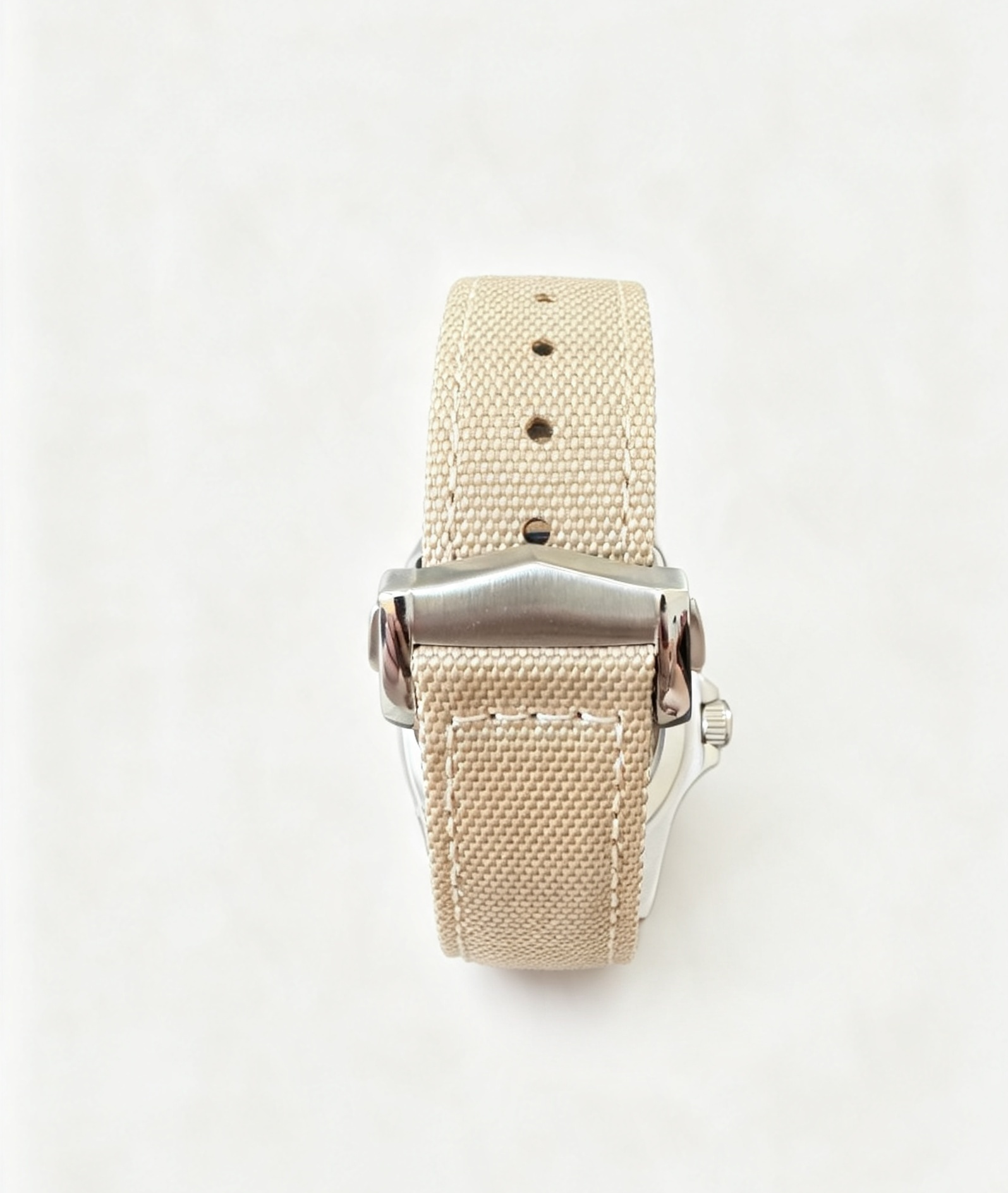 Image 6 of 6
Tudor Oyster Prince Submariner Ref. 7016/0 – Vintage Black Dial – Snowflake
A wonderfully characterful example of the Tudor Oyster Prince Submariner reference 7016/0, one of the most historically important references in the development of the Tudor dive watch.
Introduced at the end of the 1960s and appearing in Tudor's 1969 catalogue, the reference 7016 marked the beginning of the second generation of Tudor Submariners. It was the reference through which Tudor introduced several elements that would become fundamental to the brand's identity, most famously the angular “Snowflake” handset and the move from Tudor's earlier Calibre 390 to the robust ETA 2483 automatic movement.
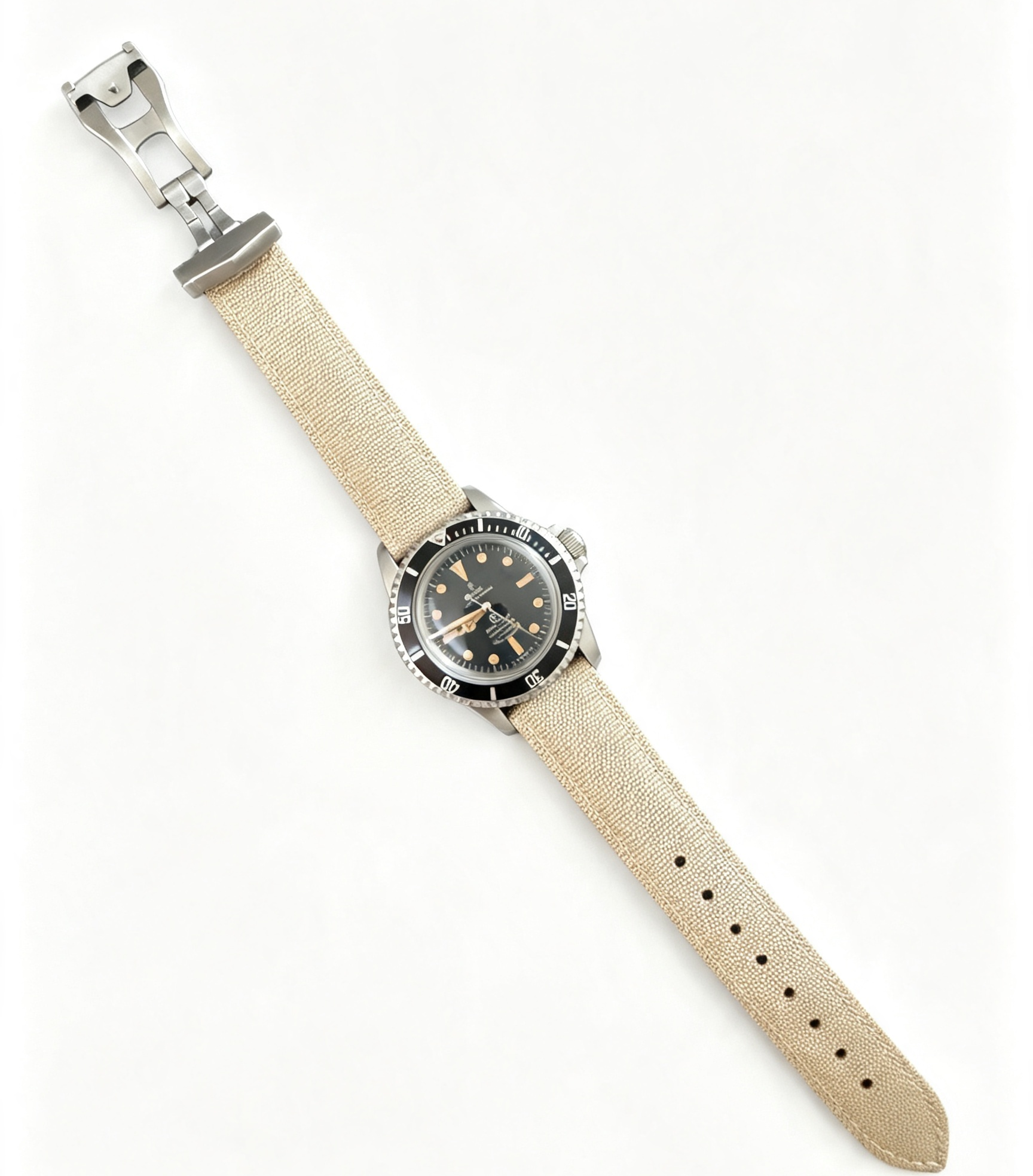
This particular watch has tremendous vintage presence. The black dial has developed a wonderfully aged appearance, with its luminous plots and handset taking on rich warm cream, amber and pumpkin tones. Combined with the black diving bezel, domed vintage-style profile and beige woven fabric strap, it has exactly the kind of naturally aged tool-watch character collectors look for in an early Tudor Submariner.
Watch Details
Brand: Tudor
Model: Oyster Prince Submariner
Reference: 7016 / 7016/0
Era: Late 1960s / 1970s
Generation: Second-generation Tudor Submariner
Case: Stainless steel Rolex Oyster case
Case Size: Approximately 39mm
Dial: Black Submariner dial with shield logo
Lume: Strongly aged warm cream / amber appearance
Hands: Vintage luminous handset
Movement: ETA Calibre 2483
Movement Type: Self-winding automatic
Frequency: 18,000 vibrations per hour
Date: None
Bezel: Black 60-minute rotating divers bezel
Crystal: Thick Plexiglas / acrylic
Crown: Rolex-signed screw-down crown
Caseback: Rolex Oyster construction; this example visibly carries “ORIGINAL OYSTER CASE BY ROLEX GENEVA” engraving
Original Water-Resistance Specification: 200 metres / 660 feet
Strap: Beige woven fabric strap with deployant-style clasp as fitted
Military Connection: Reference 7016 is historically documented as having been supplied to the French Marine Nationale, although no military provenance is claimed for this individual watch
Tudor's own historical archive confirms the fundamental specification: a 39mm Rolex-signed case, 200-metre rating, Rolex screw-down crown, rotating 60-minute bezel, thick Plexiglas crystal and ETA 2483 automatic movement.
Condition
This is a vintage Tudor that is all about patina, presence and character.
The black dial has aged beautifully, with the luminous hour plots developing an exceptionally attractive warm tone. Rather than the stark white appearance of a modern dive watch, the markers now range through shades of cream, ochre and amber, producing the unmistakable appearance of a watch that has lived through decades.
The handset displays similarly strong ageing and complements the dial extremely well. The broad luminous hands give the watch an unmistakable vintage Tudor tool-watch personality.
There is visible age and surface character to the dial, hands and crystal consistent with a vintage watch of this period. The acrylic/Plexiglas crystal shows the visual characteristics expected of an older sports watch and gives the dial the softer, warmer appearance that sapphire simply cannot reproduce.
The black bezel remains highly legible, with its bold silver/white numerals and minute markings providing strong contrast. The luminous bezel pip has also taken on a warm aged colour that works particularly well with the dial.
The stainless-steel Oyster case shows signs of previous wear and handling, with surface marks visible under close inspection. Importantly, the case still presents with an attractive vintage profile and clearly visible crown guards.
The caseback is particularly evocative of the historic relationship between the two brands, visibly carrying the familiar “ORIGINAL OYSTER CASE BY ROLEX GENEVA” wording together with the Rolex coronet.
A Rolex coronet is likewise clearly visible on the screw-down winding crown.
The watch is currently fitted to a beige woven fabric strap, which gives the piece a particularly strong military/tool-watch aesthetic and works beautifully against the aged dial.
Given the age of the watch, no claim regarding present-day water resistance should be inferred from its original 200-metre specification unless it has recently been pressure tested.
Please study all photographs carefully, as they form an important part of the condition description.
The Importance of the Tudor 7016
The 7016 is a pivotal reference in Tudor history.
When Tudor introduced references 7016 and 7021 in its 1969 catalogue, the company was effectively establishing a new visual language for its professional diving watches. Tudor itself describes these watches as the beginning of its second generation of divers.
Earlier Tudor Submariners had shared an even closer visual resemblance to contemporary Rolex Submariners.
The 7016 changed that.
Most importantly, Tudor introduced the angular hands that collectors would later nickname “Snowflake”. Tudor explains that the enlarged luminous areas were designed specifically to improve underwater legibility, and the Snowflake subsequently became one of the most recognisable design elements in the company's entire history.
The shield also replaced the earlier Tudor rose on the later-established design, creating a watch with an increasingly independent Tudor identity.
That makes the 7016 much more than simply another vintage Submariner reference.
It represents the period when the Tudor dive watch began to become unmistakably Tudor.
The Rolex & Tudor Connection
The 7016 also comes from an era when the physical relationship between Tudor and Rolex was particularly visible.
Tudor's own historical records specify that the reference used a 39mm case signed Rolex, together with a Rolex-signed screw-down crown. The watches were originally also available with Rolex-signed Oyster-type bracelets.
This example provides a particularly tangible reminder of that relationship.
Turn the watch over and the caseback visibly carries:
“ORIGINAL OYSTER CASE BY ROLEX GENEVA”
The Rolex coronet can also be seen on the winding crown.
For collectors, details such as these are part of the enormous appeal of early Tudor sports watches. Tudor supplied the dial, identity and movement, while Rolex's Oyster architecture provided the robust waterproof case construction around it.
It is a combination that belongs to a fascinating period in the histories of both brands.
ETA Calibre 2483
Another major historical change introduced with the 7016 was mechanical.
The preceding Tudor Submariner 7928 had used Tudor's Calibre 390. With the 7016, Tudor moved to the ETA 2483 automatic movement.
Tudor confirms that the ETA 2483 operates at 18,000 vibrations per hour, the same frequency as its predecessor.
Collector documentation identifies the 2483 used in the 7016 as a 25-jewel automatic calibre, and auction examples of the reference likewise document the 25-jewel ETA 2483.
This transition was enormously significant.
It established the basic Tudor formula that enthusiasts would come to know so well: proven Rolex Oyster case architecture combined with robust Swiss automatic movements and Tudor's own increasingly distinctive design language.
The result was a professional diving watch capable of being produced at a different price point from its Rolex counterpart without abandoning the qualities that made the Oyster construction so respected.
The Birth of the Snowflake
Few design elements are more closely associated with Tudor today than the Snowflake.
And its history leads directly back to the 7016.
Tudor confirms that the Snowflake hands first appeared in its 1969 catalogue on references 7016 and 7021. The enlarged luminous surfaces were intended to maximise underwater legibility, giving divers a clearer indication in poor visibility.
The design became so closely associated with Tudor's professional diving watches that, decades later, the company revived it for the modern Black Bay and Pelagos families.
Today it is arguably Tudor's single most recognisable design signature.
That gives surviving vintage 7016 examples particular historical importance: they come from the generation in which one of modern Tudor's defining visual elements was born.
The Marine Nationale Connection
The 7016 also occupies an important place in Tudor's relationship with the French Navy – the Marine Nationale.
Tudor officially documents that reference 7016 was used by French Navy divers and states that, in 1974, the 7016 became the first Tudor diving watch to carry the famous “TUDOR M.N.” issue engravings, followed by the year of issue.
The Snowflake design was especially relevant in this environment. Its larger luminous surfaces improved readability and duration of illumination, an obvious advantage for military divers operating underwater.
That history has helped turn genuine Marine Nationale Tudor Submariners into some of the most closely followed vintage military watches.
Importantly, however, no claim is being made that this particular watch is a Marine Nationale-issued example. Without corresponding military issue markings or documented provenance, it should simply be appreciated as a civilian 7016 from the same historically significant reference family.
Why Collectors Love the 7016/0
The appeal of the Tudor Submariner 7016/0 goes considerably deeper than its appearance.
It represents a pivotal moment in Tudor's development.
It belongs to the second generation of Tudor diving watches.
It introduced the ETA movement architecture that would define Tudor Submariners for years.
It belongs to the references that introduced the legendary Snowflake design.
It retained the 39mm Rolex Oyster case and Rolex screw-down crown.
It offered a serious original specification of 200 metres / 660 feet.
And the reference has a documented connection with the French Marine Nationale.
Then there is this particular watch.
The deep black dial, warm aged luminous material, vintage handset, black bezel and beige woven strap create a beautifully cohesive appearance. It looks every inch the vintage professional tool watch.
For many collectors, this kind of patina is precisely what makes vintage Tudor so compelling. No modern reissue can genuinely reproduce the visual effect created by decades of ageing.
A Landmark Vintage Tudor Submariner
The 7016/0 sits at the intersection of two fascinating periods in Tudor's history.
Look backwards and it retains the unmistakable Rolex Oyster architecture inherited from the earlier Tudor Submariners.
Look forwards and you see the beginnings of the Tudor we recognise today: the shield, the Snowflake design, robust ETA-powered construction and a more independent visual identity.
That makes it one of the key references for anyone interested in the evolution of the Tudor Submariner.
This particular example adds another layer of appeal through its beautifully aged appearance. The warm luminous plots, strongly patinated handset, black dial, vintage acrylic crystal and black bezel combine with the beige woven strap to create a watch with enormous character.
It is not trying to look new.
Its appeal is precisely the opposite.
It looks like a vintage Tudor Submariner should: purposeful, aged and unmistakably connected to one of the most important periods in Tudor's diving-watch history.
Tudor – official history of the Submariner 7016 and second-generation Tudor divers
Tudor Oyster Prince Submariner – Ref. 7016/0.
39mm. Rolex Oyster case. ETA 2483. 200m original specification. Vintage patina.
Built by time. Worn with character.
A wonderfully characterful example of the Tudor Oyster Prince Submariner reference 7016/0, one of the most historically important references in the development of the Tudor dive watch.
Introduced at the end of the 1960s and appearing in Tudor's 1969 catalogue, the reference 7016 marked the beginning of the second generation of Tudor Submariners. It was the reference through which Tudor introduced several elements that would become fundamental to the brand's identity, most famously the angular “Snowflake” handset and the move from Tudor's earlier Calibre 390 to the robust ETA 2483 automatic movement.
This particular watch has tremendous vintage presence. The black dial has developed a wonderfully aged appearance, with its luminous plots and handset taking on rich warm cream, amber and pumpkin tones. Combined with the black diving bezel, domed vintage-style profile and beige woven fabric strap, it has exactly the kind of naturally aged tool-watch character collectors look for in an early Tudor Submariner.
Watch Details
Brand: Tudor
Model: Oyster Prince Submariner
Reference: 7016 / 7016/0
Era: Late 1960s / 1970s
Generation: Second-generation Tudor Submariner
Case: Stainless steel Rolex Oyster case
Case Size: Approximately 39mm
Dial: Black Submariner dial with shield logo
Lume: Strongly aged warm cream / amber appearance
Hands: Vintage luminous handset
Movement: ETA Calibre 2483
Movement Type: Self-winding automatic
Frequency: 18,000 vibrations per hour
Date: None
Bezel: Black 60-minute rotating divers bezel
Crystal: Thick Plexiglas / acrylic
Crown: Rolex-signed screw-down crown
Caseback: Rolex Oyster construction; this example visibly carries “ORIGINAL OYSTER CASE BY ROLEX GENEVA” engraving
Original Water-Resistance Specification: 200 metres / 660 feet
Strap: Beige woven fabric strap with deployant-style clasp as fitted
Military Connection: Reference 7016 is historically documented as having been supplied to the French Marine Nationale, although no military provenance is claimed for this individual watch
Tudor's own historical archive confirms the fundamental specification: a 39mm Rolex-signed case, 200-metre rating, Rolex screw-down crown, rotating 60-minute bezel, thick Plexiglas crystal and ETA 2483 automatic movement.
Condition
This is a vintage Tudor that is all about patina, presence and character.
The black dial has aged beautifully, with the luminous hour plots developing an exceptionally attractive warm tone. Rather than the stark white appearance of a modern dive watch, the markers now range through shades of cream, ochre and amber, producing the unmistakable appearance of a watch that has lived through decades.
The handset displays similarly strong ageing and complements the dial extremely well. The broad luminous hands give the watch an unmistakable vintage Tudor tool-watch personality.
There is visible age and surface character to the dial, hands and crystal consistent with a vintage watch of this period. The acrylic/Plexiglas crystal shows the visual characteristics expected of an older sports watch and gives the dial the softer, warmer appearance that sapphire simply cannot reproduce.
The black bezel remains highly legible, with its bold silver/white numerals and minute markings providing strong contrast. The luminous bezel pip has also taken on a warm aged colour that works particularly well with the dial.
The stainless-steel Oyster case shows signs of previous wear and handling, with surface marks visible under close inspection. Importantly, the case still presents with an attractive vintage profile and clearly visible crown guards.
The caseback is particularly evocative of the historic relationship between the two brands, visibly carrying the familiar “ORIGINAL OYSTER CASE BY ROLEX GENEVA” wording together with the Rolex coronet.
A Rolex coronet is likewise clearly visible on the screw-down winding crown.
The watch is currently fitted to a beige woven fabric strap, which gives the piece a particularly strong military/tool-watch aesthetic and works beautifully against the aged dial.
Given the age of the watch, no claim regarding present-day water resistance should be inferred from its original 200-metre specification unless it has recently been pressure tested.
Please study all photographs carefully, as they form an important part of the condition description.
The Importance of the Tudor 7016
The 7016 is a pivotal reference in Tudor history.
When Tudor introduced references 7016 and 7021 in its 1969 catalogue, the company was effectively establishing a new visual language for its professional diving watches. Tudor itself describes these watches as the beginning of its second generation of divers.
Earlier Tudor Submariners had shared an even closer visual resemblance to contemporary Rolex Submariners.
The 7016 changed that.
Most importantly, Tudor introduced the angular hands that collectors would later nickname “Snowflake”. Tudor explains that the enlarged luminous areas were designed specifically to improve underwater legibility, and the Snowflake subsequently became one of the most recognisable design elements in the company's entire history.
The shield also replaced the earlier Tudor rose on the later-established design, creating a watch with an increasingly independent Tudor identity.
That makes the 7016 much more than simply another vintage Submariner reference.
It represents the period when the Tudor dive watch began to become unmistakably Tudor.
The Rolex & Tudor Connection
The 7016 also comes from an era when the physical relationship between Tudor and Rolex was particularly visible.
Tudor's own historical records specify that the reference used a 39mm case signed Rolex, together with a Rolex-signed screw-down crown. The watches were originally also available with Rolex-signed Oyster-type bracelets.
This example provides a particularly tangible reminder of that relationship.
Turn the watch over and the caseback visibly carries:
“ORIGINAL OYSTER CASE BY ROLEX GENEVA”
The Rolex coronet can also be seen on the winding crown.
For collectors, details such as these are part of the enormous appeal of early Tudor sports watches. Tudor supplied the dial, identity and movement, while Rolex's Oyster architecture provided the robust waterproof case construction around it.
It is a combination that belongs to a fascinating period in the histories of both brands.
ETA Calibre 2483
Another major historical change introduced with the 7016 was mechanical.
The preceding Tudor Submariner 7928 had used Tudor's Calibre 390. With the 7016, Tudor moved to the ETA 2483 automatic movement.
Tudor confirms that the ETA 2483 operates at 18,000 vibrations per hour, the same frequency as its predecessor.
Collector documentation identifies the 2483 used in the 7016 as a 25-jewel automatic calibre, and auction examples of the reference likewise document the 25-jewel ETA 2483.
This transition was enormously significant.
It established the basic Tudor formula that enthusiasts would come to know so well: proven Rolex Oyster case architecture combined with robust Swiss automatic movements and Tudor's own increasingly distinctive design language.
The result was a professional diving watch capable of being produced at a different price point from its Rolex counterpart without abandoning the qualities that made the Oyster construction so respected.
The Birth of the Snowflake
Few design elements are more closely associated with Tudor today than the Snowflake.
And its history leads directly back to the 7016.
Tudor confirms that the Snowflake hands first appeared in its 1969 catalogue on references 7016 and 7021. The enlarged luminous surfaces were intended to maximise underwater legibility, giving divers a clearer indication in poor visibility.
The design became so closely associated with Tudor's professional diving watches that, decades later, the company revived it for the modern Black Bay and Pelagos families.
Today it is arguably Tudor's single most recognisable design signature.
That gives surviving vintage 7016 examples particular historical importance: they come from the generation in which one of modern Tudor's defining visual elements was born.
The Marine Nationale Connection
The 7016 also occupies an important place in Tudor's relationship with the French Navy – the Marine Nationale.
Tudor officially documents that reference 7016 was used by French Navy divers and states that, in 1974, the 7016 became the first Tudor diving watch to carry the famous “TUDOR M.N.” issue engravings, followed by the year of issue.
The Snowflake design was especially relevant in this environment. Its larger luminous surfaces improved readability and duration of illumination, an obvious advantage for military divers operating underwater.
That history has helped turn genuine Marine Nationale Tudor Submariners into some of the most closely followed vintage military watches.
Importantly, however, no claim is being made that this particular watch is a Marine Nationale-issued example. Without corresponding military issue markings or documented provenance, it should simply be appreciated as a civilian 7016 from the same historically significant reference family.
Why Collectors Love the 7016/0
The appeal of the Tudor Submariner 7016/0 goes considerably deeper than its appearance.
It represents a pivotal moment in Tudor's development.
It belongs to the second generation of Tudor diving watches.
It introduced the ETA movement architecture that would define Tudor Submariners for years.
It belongs to the references that introduced the legendary Snowflake design.
It retained the 39mm Rolex Oyster case and Rolex screw-down crown.
It offered a serious original specification of 200 metres / 660 feet.
And the reference has a documented connection with the French Marine Nationale.
Then there is this particular watch.
The deep black dial, warm aged luminous material, vintage handset, black bezel and beige woven strap create a beautifully cohesive appearance. It looks every inch the vintage professional tool watch.
For many collectors, this kind of patina is precisely what makes vintage Tudor so compelling. No modern reissue can genuinely reproduce the visual effect created by decades of ageing.
A Landmark Vintage Tudor Submariner
The 7016/0 sits at the intersection of two fascinating periods in Tudor's history.
Look backwards and it retains the unmistakable Rolex Oyster architecture inherited from the earlier Tudor Submariners.
Look forwards and you see the beginnings of the Tudor we recognise today: the shield, the Snowflake design, robust ETA-powered construction and a more independent visual identity.
That makes it one of the key references for anyone interested in the evolution of the Tudor Submariner.
This particular example adds another layer of appeal through its beautifully aged appearance. The warm luminous plots, strongly patinated handset, black dial, vintage acrylic crystal and black bezel combine with the beige woven strap to create a watch with enormous character.
It is not trying to look new.
Its appeal is precisely the opposite.
It looks like a vintage Tudor Submariner should: purposeful, aged and unmistakably connected to one of the most important periods in Tudor's diving-watch history.
Tudor – official history of the Submariner 7016 and second-generation Tudor divers
Tudor Oyster Prince Submariner – Ref. 7016/0.
39mm. Rolex Oyster case. ETA 2483. 200m original specification. Vintage patina.
Built by time. Worn with character.