
 Image 1 of 5
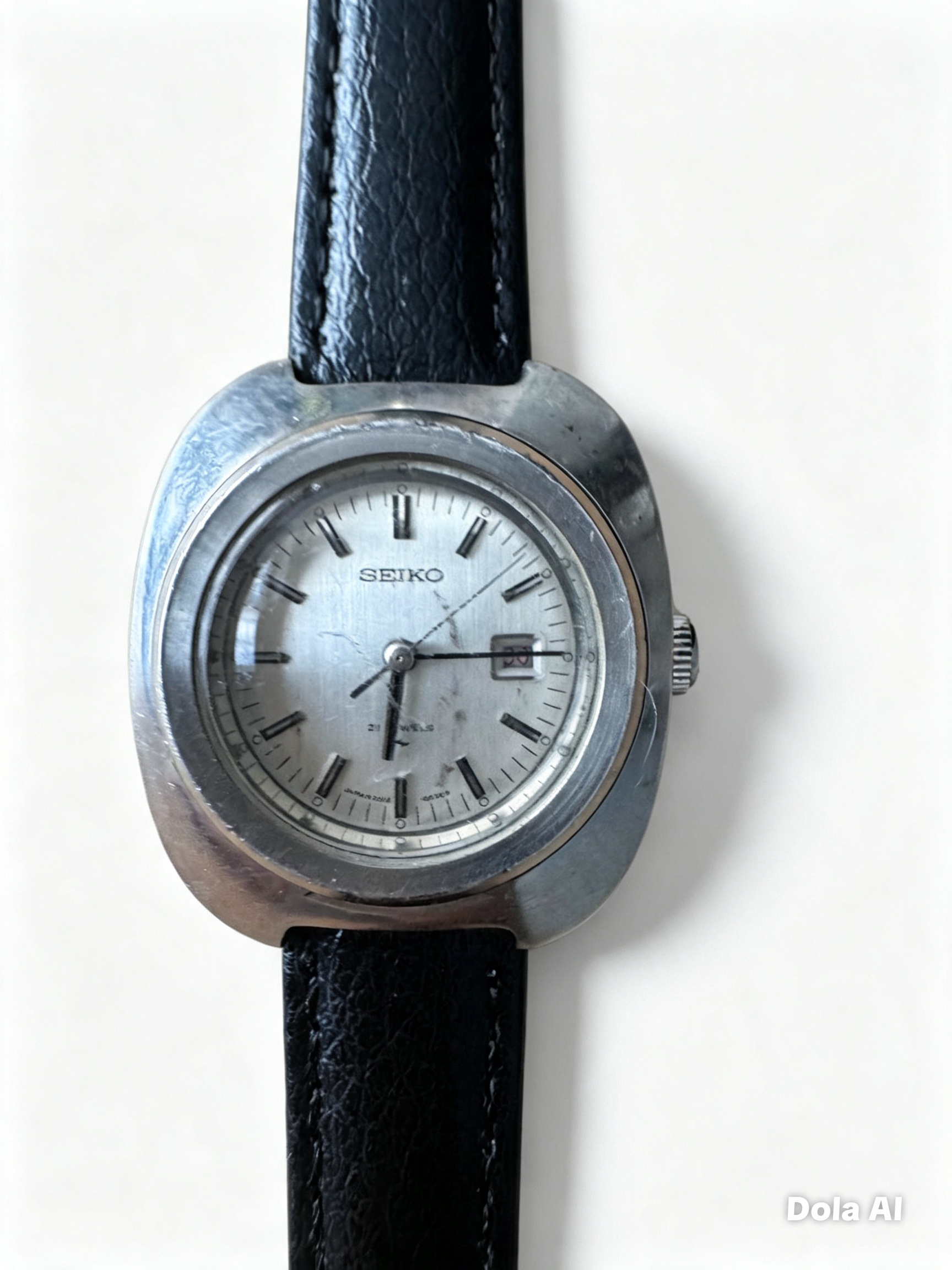 Image 2 of 5
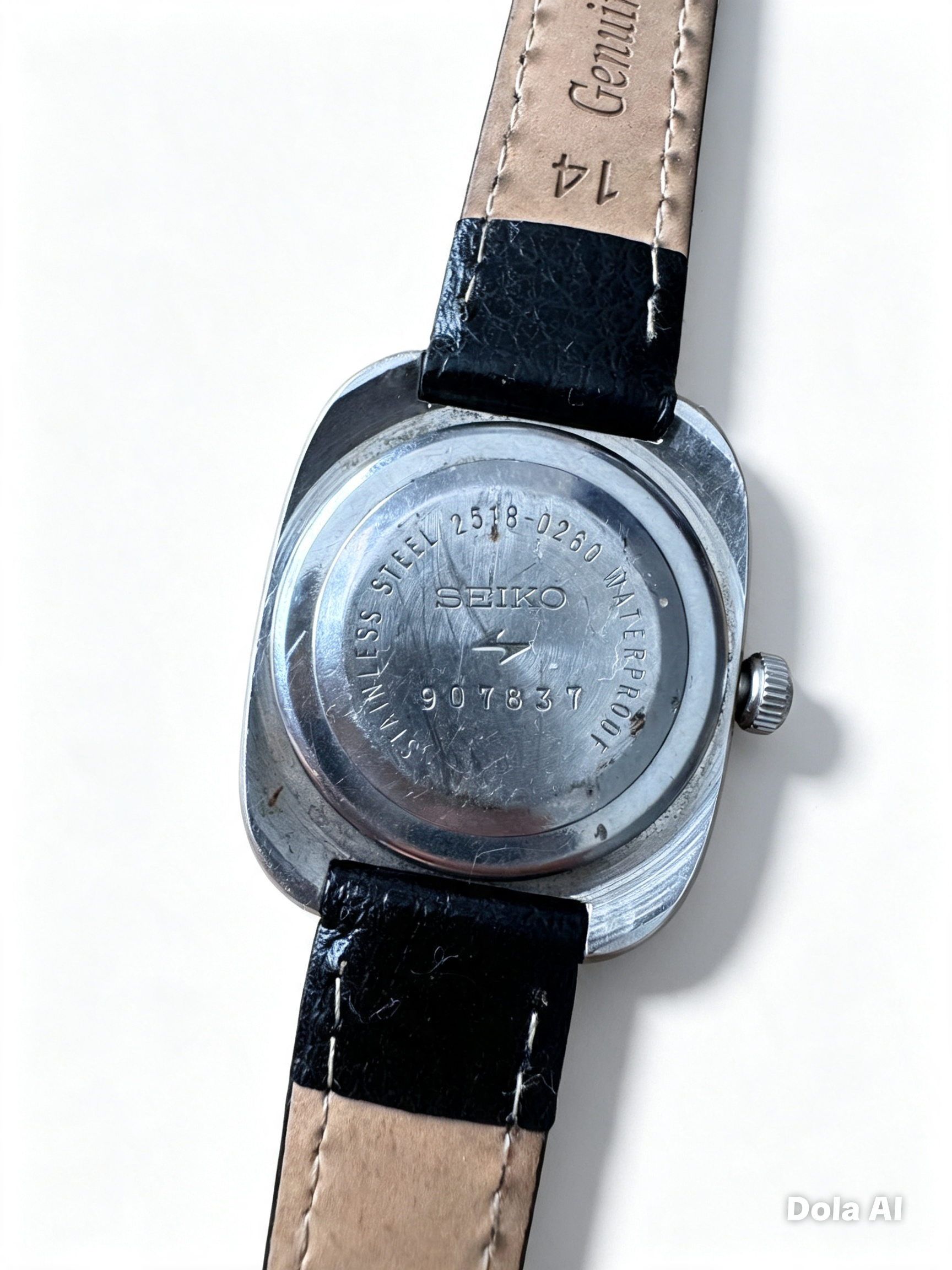 Image 3 of 5
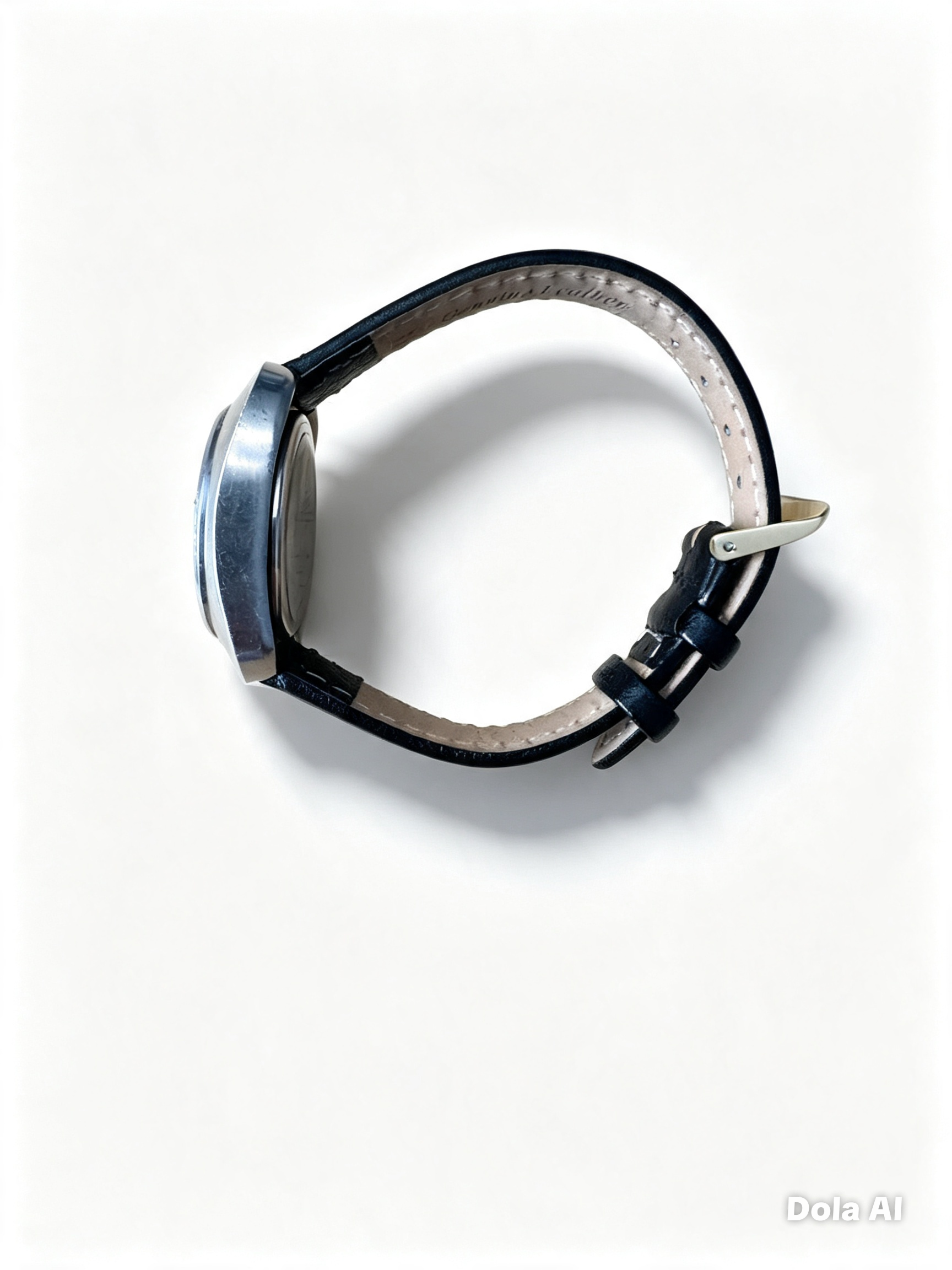 Image 4 of 5
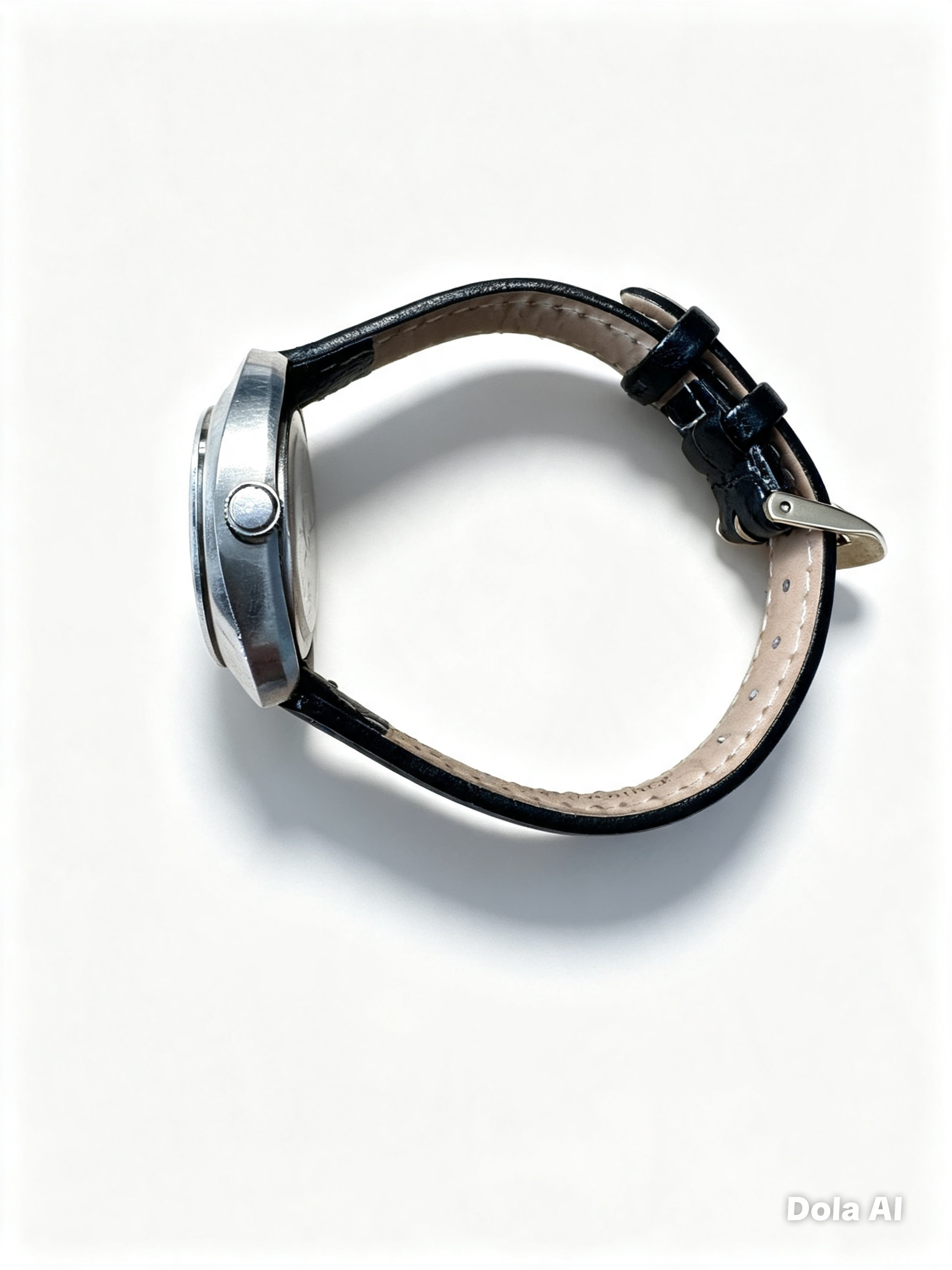 Image 5 of 5
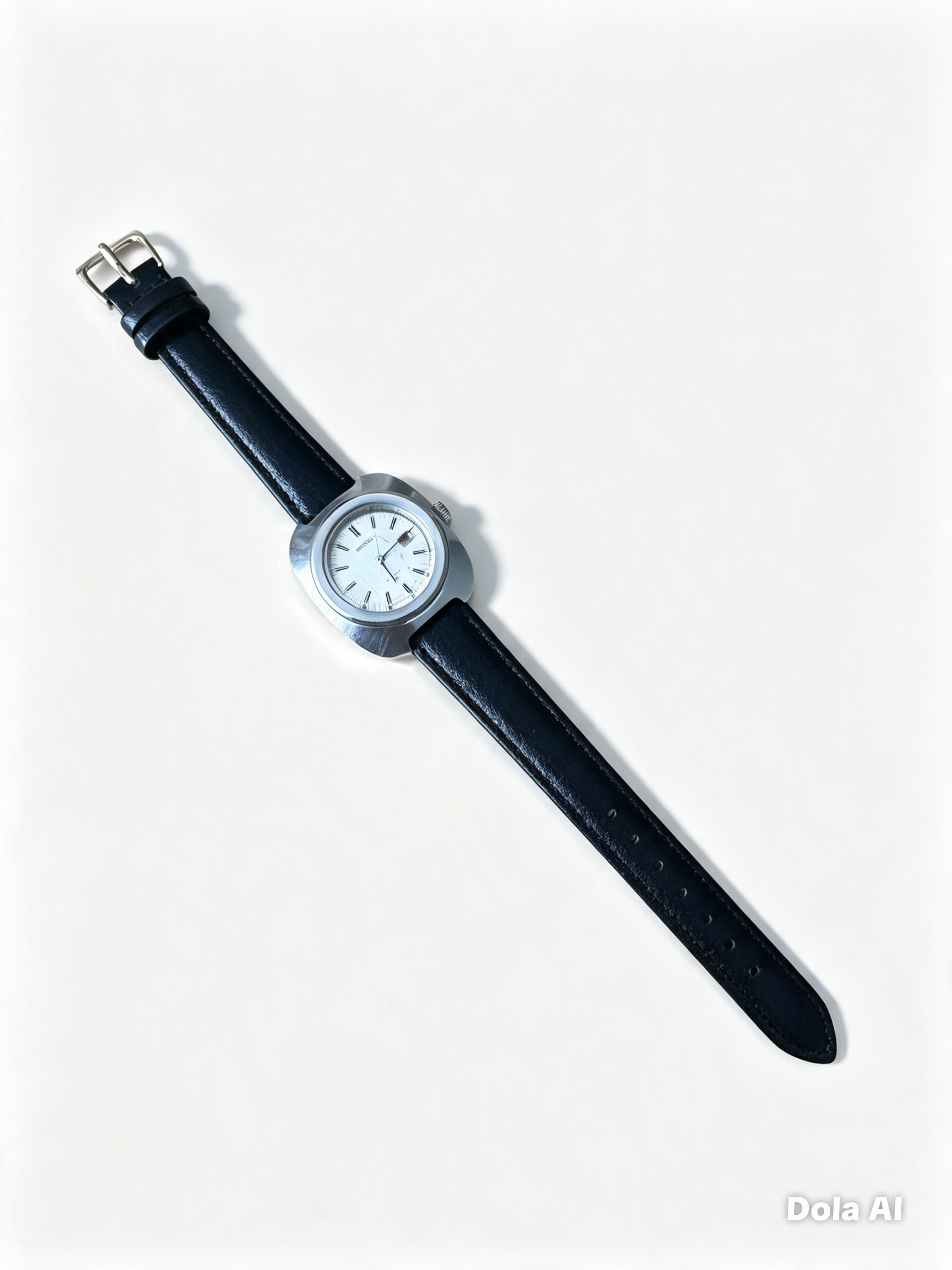
A wonderfully characterful vintage Seiko reference 2518-0260, featuring a silver sun-brushed dial, date display and compact cushion-shaped stainless-steel case.
The reference number is clearly engraved on the caseback, allowing this example to be identified with confidence as 2518-0260. Surviving examples and technical documentation for the 2518B calibre identify the family as a manually wound mechanical Seiko with date, produced in several jewel configurations. Exact-reference examples of 2518-0260 are documented with 21-jewel movements.
Its combination of an almost tonneau-style case, restrained silver dial and compact proportions captures a particularly attractive period of Japanese watch design.
Brand: Seiko
Reference: 2518-0260
Era: Vintage, circa late 1960s–1970s
Movement: Mechanical, manual wind
Calibre Family: Seiko 2518 / 2518B
Jewels: Dial marked 21 Jewels; exact-reference examples are documented with 21-jewel movements
Frequency: 19,800 vibrations per hour for the 2518B calibre
Functions: Hours, minutes, central seconds and date
Case: Stainless steel
Case Shape: Cushion / tonneau-style
Approx. Size: Around 29–30mm across based on documented examples of the reference
Dial: Silver, vertically brushed/sunburst finish
Markers: Applied baton hour markers
Date: Aperture at 3 o'clock
Crystal: Clear vintage crystal; exact material not independently confirmed
Crown: Fluted crown at 3 o'clock
Caseback: Stainless steel, marked SEIKO / 2518-0260 / WATERPROOF
Serial: 907837, as visible on the caseback
Strap: Black leather-style strap as fitted
Buckle: Silver-tone pin buckle
Water Resistance: Historically marked WATERPROOF; no current water-resistance guarantee
Included: Watch and strap as photographed
Box / Papers: None shown
Technical documentation for Seiko's 2518B identifies it as a compact hand-wound movement measuring approximately 17.2mm in diameter and 3.8mm high, operating at 19,800 vph and incorporating a date complication with quick-setting capability.
This watch displays an appealing, honest vintage condition with clear evidence of its age and previous use.
The silver dial remains attractive, with a vertically brushed finish that changes subtly according to the light. The applied baton markers, Seiko signature and 21 JEWELS designation remain visible, while the framed date aperture at 3 o'clock gives the otherwise restrained dial a useful complication.
There is visible ageing and spotting across the dial, together with marks to the crystal. The stainless-steel case shows scratches, scuffs and general surface wear, particularly around the broad upper surfaces and caseback. These signs of use are clearly visible in the photographs and contribute to the watch's genuine vintage character.
The caseback engraving remains especially useful, with the 2518-0260 reference, serial and period WATERPROOF designation all still readable.
The black leather-style strap is fitted with a simple pin buckle and should be regarded as a replacement/as-fitted strap rather than assumed original Seiko equipment.
No representation is made regarding recent servicing, accuracy or service history. The movement has not been photographed internally, so the listing does not make claims regarding originality of individual movement components. Despite the period WATERPROOF marking, water resistance should not be assumed on a watch of this age unless professionally pressure tested.
Please study all photographs carefully, as they form an important part of the condition description.
The 2518 family is an interesting example of Seiko's compact mechanical engineering.
Technical material for the 2518B describes a manually wound movement running at 19,800 vph, equipped with a date complication and produced in multiple jewel configurations. The same technical reference specifically lists 2518-0260 among the case references associated with the calibre.
Period examples of this exact reference are also catalogued as mechanical hand-wound watches, with approximately 29–30mm cases.
That makes this a very different proposition from the inexpensive battery-powered dress watches that later became ubiquitous: it retains the traditional interaction of winding a mechanical movement by hand.
The broad cushion-shaped case is one of the most appealing elements of reference 2518-0260.
Instead of conventional projecting lugs and a round dress-watch case, Seiko surrounded the circular dial with a wide, almost architectural stainless-steel body. The brushed silver dial then mirrors the metallic character of the case, while black detailing and polished applied markers provide contrast.
At approximately 29–30mm, documented examples are compact by modern standards, but the broad cushion case gives the watch considerably more visual presence than its dimensions suggest.
Reference 2518-0260 combines several qualities that make vintage Seiko collecting so interesting: an identifiable Japanese mechanical calibre, distinctive period case architecture, a signed silver dial, 21-jewel designation and a useful date complication.
Most importantly, this example has not been stripped of the signs of its history. The case wear, dial ageing and surface marks make it unmistakably vintage, while the clearly readable caseback reference provides a firm identification point.
For anyone looking beyond the better-known Seiko sports models, the 2518-0260 offers an unusual glimpse into the smaller mechanical dress watches Seiko was producing during a transformative era for the company.